
Blog
Dairy Cold Chain Management in India: Processes, Challenges and Best Practices
23 October 2026By Abhishek Kumar
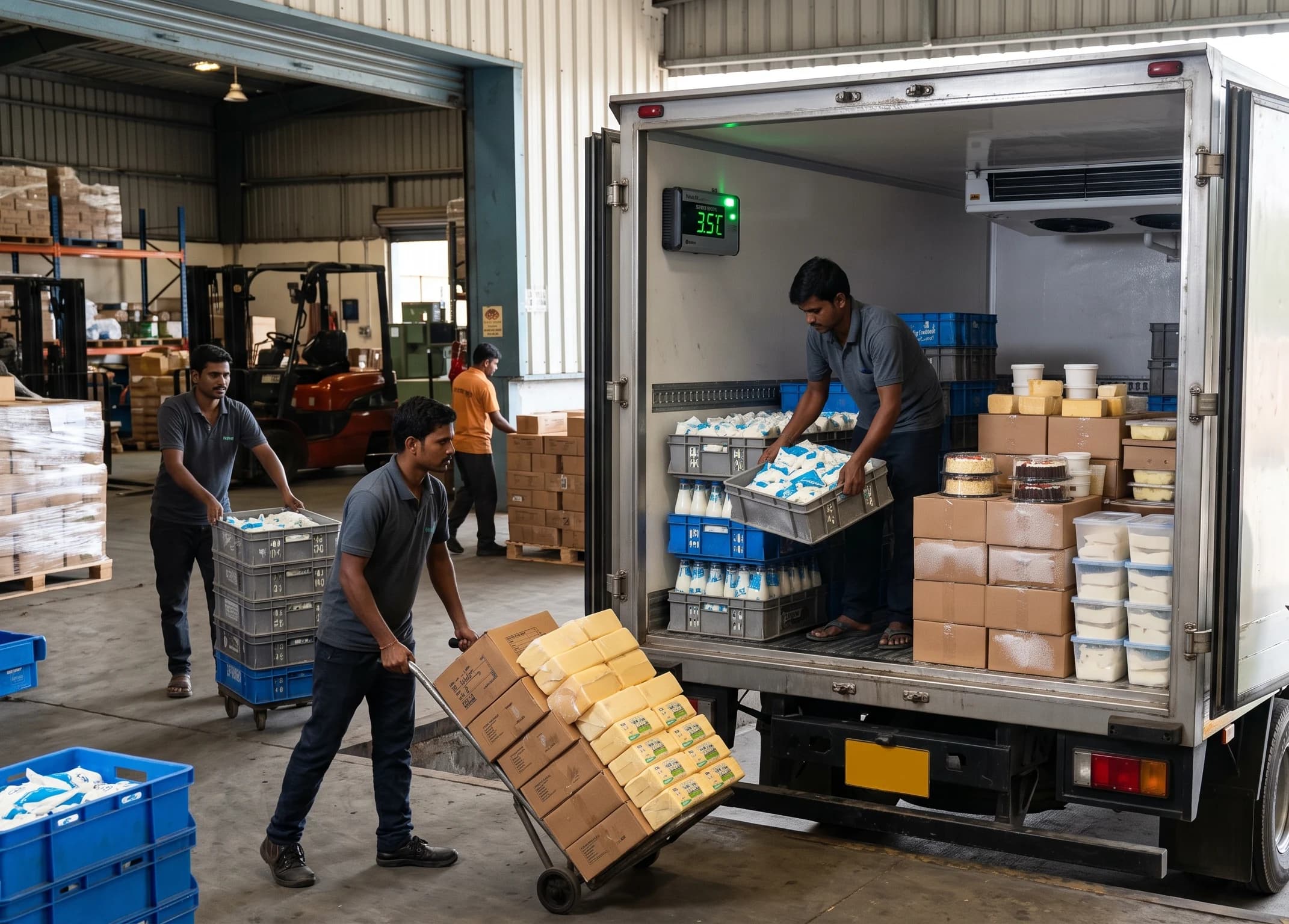
Dairy cold chain management India involves maintaining product-specific temperature conditions during storage, transportation, handling, and distribution. An effective cold chain helps preserve dairy quality, reduce spoilage, support food safety, and improve delivery reliability. Refrigerated vehicles, suitable storage facilities, temperature monitoring, and coordinated logistics are essential throughout the supply chain.
Dairy cold chain management India helps businesses protect milk, curd, paneer, cheese, and other perishable products throughout distribution. Maintaining suitable temperatures requires more than refrigeration; it demands reliable transportation, careful handling, and continuous operational visibility. For dairy brands managing growing delivery networks, JustDeliveries offers temperature-controlled logistics and integrated distribution support. Understanding the challenges is the first step towards building a more dependable dairy supply chain.
What Is Dairy Cold Chain Management in India?
Dairy cold chain management India refers to the coordinated storage, handling, transportation, and distribution of dairy products under appropriate temperature conditions. The process begins at collection or processing facilities and continues through warehouses, distribution centres, retail outlets, and other delivery destinations.
Unlike conventional transportation, a dairy cold chain must account for product perishability, refrigeration requirements, delivery schedules, and handling procedures at every stage. For a wider view of the controls involved, read about temperature controlled logistics.
An effective cold chain typically includes:
- Temperature-controlled storage: Facilities designed to maintain conditions suitable for specific dairy products.
- Refrigerated transportation: Vehicles equipped to transport temperature-sensitive products.
- Temperature monitoring: Sensors, data loggers, and records that help identify deviations.
- Coordinated distribution: Planned routes, delivery windows, and efficient loading and unloading.
- Operational accountability: Clear procedures for responding to delays, equipment failures, and temperature excursions.
Each component supports the others. Refrigerated storage alone cannot protect a product if it experiences unsuitable conditions during transportation or delivery. For milk in particular, see cold storage for milk india.
Why Is Cold Chain Management Important for the Dairy Industry?
Milk and many dairy products are highly perishable. Exposure to unsuitable temperatures, poor hygiene, and prolonged handling delays can compromise quality and food safety.
A reliable cold chain helps businesses manage these risks while maintaining consistent distribution.
Preventing spoilage and protecting product quality
Maintaining appropriate storage and transportation conditions helps limit temperature-related deterioration. Businesses must also follow hygienic handling practices and product-specific food safety procedures.
Reducing waste and financial losses
Spoiled inventory, rejected shipments, customer complaints, and product returns can increase operating costs. Better coordination and temperature monitoring help businesses identify problems and investigate their causes.
Supporting dependable distribution
Dairy manufacturers, distributors, retailers, restaurants, and quick-commerce platforms often depend on regular replenishment. Consistent logistics planning helps maintain product availability across multiple locations.
How Does the Dairy Cold Chain Work from Farm to Retail?
A dependable cold chain connects several operational stages. A failure at any point can affect subsequent handling and delivery.
1. Milk collection and initial chilling
Raw milk requires hygienic collection and prompt cooling according to applicable requirements. Collection centres need appropriate equipment, reliable power, and suitable procedures for transferring milk to the next stage.
2. Processing, packaging, and storage
Processing and packaging requirements depend on the product and treatment method. Pasteurised milk, fermented products, paneer, and cheese do not necessarily have identical storage requirements.
Businesses should establish product-specific temperature specifications and ensure that storage facilities can maintain them. For storage at this stage, see dairy processing cold storage.
3. Refrigerated transportation
Vehicles should be appropriate for the cargo, pre-cooled when required, and prepared before loading. Teams must minimise avoidable delays and follow procedures that protect temperature conditions during transit. For frozen products in particular, see frozen food transportation india.
4. Distribution and final delivery
At the receiving location, efficient unloading and prompt transfer to suitable storage are essential. Delivery records and temperature data can help businesses investigate deviations and improve future operations.
These stages illustrate why dairy logistics India requires coordination between facilities, vehicles, delivery teams, and receiving locations.
What Are the Main Dairy Cold Chain Challenges in India?
Several operational challenges can disrupt dairy distribution.
Temperature fluctuations during transit
Refrigeration failures, frequent door openings, loading delays, and inadequate monitoring can expose products to unsuitable conditions. Temperature records help businesses identify when deviations occurred and determine appropriate corrective action.
Infrastructure and power constraints
Cold storage facilities and chilling centres require suitable equipment, dependable energy supplies, and regular maintenance. Businesses must also coordinate capacity across collection points, warehouses, and distribution destinations.
Rising delivery complexity
Serving multiple outlets, distribution centres, and dark stores creates scheduling and coordination challenges. Poor route planning can increase delivery time and vehicle operating costs. For hubs in the south, see cold chain logistics hyderabad.
Limited shipment visibility
Without timely information about vehicle locations, delivery progress, and temperature compliance, operations teams may struggle to respond quickly to disruptions.
Addressing these challenges requires more than refrigerated vehicles. Businesses need consistent procedures, capable logistics partners, and reliable operational data. For dark stores in Bangalore, see frozen food transport bangalore.
How Can Dairy Businesses Improve Cold Chain Performance?
A practical improvement plan should combine process discipline with technology.
- Define product-specific requirements: Establish appropriate temperature ranges, handling procedures, and storage conditions for each product.
- Plan routes and delivery windows: Coordinate vehicle schedules with warehouse readiness and receiving capacity.
- Monitor temperature throughout transit: Use suitable monitoring devices and retain records for review.
- Train handling teams: Reinforce hygienic loading, unloading, and product-transfer procedures.
- Maintain vehicles and equipment: Inspect refrigeration systems and address faults promptly.
- Track operational performance: Review temperature excursions, on-time deliveries, spoilage, returns, and delivery costs.
These measures make dairy cold chain management India more measurable and easier to improve over time. Businesses can use performance data to identify recurring problems, refine delivery schedules, and strengthen accountability.
How Does Technology Improve Dairy Logistics?
Technology provides visibility into operations that would otherwise depend on manual updates and fragmented records.
Modern logistics systems can help businesses monitor:
- Live vehicle locations and route progress.
- Temperature compliance and recorded deviations.
- Delivery service-level agreements (SLAs).
- Shipment status and proof of delivery.
- Billing information and operational performance.
At JustDeliveries, the HQ App provides food and beverage brands with a central dashboard for live vehicle tracking, temperature compliance, SLAs, billing, and AI-driven performance insights in real time. This helps teams review logistics performance and make better-informed operational decisions.
Technology is most useful when monitoring information leads to action. A recorded temperature deviation, for example, should trigger an established escalation and investigation process rather than remain an isolated data point.
How Quick Commerce Is Changing Dairy Cold Chain Logistics
Quick commerce has increased the importance of frequent replenishment, shorter delivery windows, and reliable coordination between distribution hubs and dark stores.
Dairy products moving through these networks require suitable temperature-controlled handling during transportation and storage. Rapid fulfilment does not remove the need for product-specific temperature requirements or food safety procedures. For frozen dairy such as ice cream, see ice cream supply chain india.
JustDeliveries supports temperature-controlled logistics for Swiggy Instamart, Zepto, Blinkit, Amazon, JioMart, and BigBasket, including hub-to-hub transportation and dark store deliveries with real-time tracking and temperature monitoring.
For businesses serving these channels, dairy cold chain management India must account for both delivery speed and consistent temperature control. Better vehicle visibility and coordinated replenishment help operations teams manage distribution demands more effectively.
What Should You Look for in a Dairy Cold Chain Partner in India?
Selecting a dairy cold chain partner India requires evaluating operational capabilities, not simply comparing vehicle availability or transportation rates.
Consider the following factors:
- Temperature-controlled transportation: Can the provider support your products’ required conditions and delivery schedules?
- Storage and distribution capabilities: Can it coordinate warehousing, inventory movement, and transportation where required?
- Tracking and monitoring: Does it provide visibility into vehicle movement and temperature records?
- Reliable service processes: Are delivery responsibilities, escalation procedures, and performance expectations clearly defined?
- Scalability: Can the operating model accommodate additional routes, outlets, and shipment volumes?
JustDeliveries supports food and beverage businesses with temperature-controlled transportation, cold storage, and coordinated distribution solutions. Its dairy and milk logistics service addresses recurring delivery needs, careful product handling, and real-time shipment visibility.
For a dairy brand, the right partner should fit its operational requirements while helping maintain control across the distribution journey. For a closer look at frozen dairy handling, read how to transport ice cream without melting india.
Strengthen Your Dairy Supply Chain with JustDeliveries
Maintaining dairy quality requires a coordinated approach to transportation, storage, handling, and monitoring. As distribution networks expand and quick-commerce demand grows, businesses need logistics operations that combine reliable execution with real-time visibility.
Mansi Mahansaria, founder of JustDeliveries, has helped shape the company’s focus on technology-enabled logistics for food and beverage businesses.
Looking for a dependable dairy cold chain partner India?
JustDeliveries supports dairy brands with temperature-controlled transportation, cold storage, coordinated B2B deliveries, and the HQ App for real-time operational visibility. Whether you are improving recurring deliveries or managing distribution across multiple locations, the right logistics setup can help you build a more reliable supply chain.
Partner with JustDeliveries to plan a cold chain solution suited to your business.
Explore JustDeliveries’ Dairy & Milk Logistics service or contact the team to discuss your requirements.
Frequently Asked Questions
Q1. How does a dairy cold chain work?
It connects collection, processing, storage, refrigerated transportation, and delivery while maintaining product-specific temperature conditions and hygienic handling practices.
Q2. How can dairy businesses prevent temperature breaches during delivery?
Use suitable refrigerated vehicles, plan routes carefully, monitor temperatures, minimise handling delays, maintain equipment, and establish corrective-action procedures.
Q3. Can refrigerated transportation reduce dairy spoilage?
Yes. When correctly operated, refrigerated transportation helps maintain suitable conditions and reduce temperature-related deterioration. It cannot compensate for poor initial quality, inadequate hygiene, or improper handling.
Q4. Is cold chain management necessary for every dairy product?
Temperature control requirements vary by product, processing method, packaging, and applicable food safety guidance. Businesses should follow the appropriate storage and transportation specifications for each product.
Q5. Will quick commerce increase the need for dairy cold chain logistics?
Quick commerce creates demand for frequent replenishment and tighter delivery schedules. These operations require dependable transportation, appropriate storage, and visibility into temperature compliance.
Q6. What temperature should dairy products be transported at?
There is no single temperature suitable for every dairy product. Businesses should follow applicable regulatory requirements, validated product specifications, and manufacturer handling instructions.
Q7. What should a dairy brand temperature-controlled transport provider offer?
Look for suitable refrigerated vehicles, temperature monitoring, reliable delivery scheduling, hygienic handling, shipment visibility, and clear procedures for managing deviations.
Q8. Why choose a specialised dairy cold chain partner in India?
A specialised partner can coordinate temperature-sensitive transportation, handling, and distribution requirements, helping businesses improve visibility and manage recurring deliveries more consistently.