
Blog
Temperature-Controlled Logistics for Chocolate Brands in India: A Complete Guide
25 October 2026By Abhishek Kumar
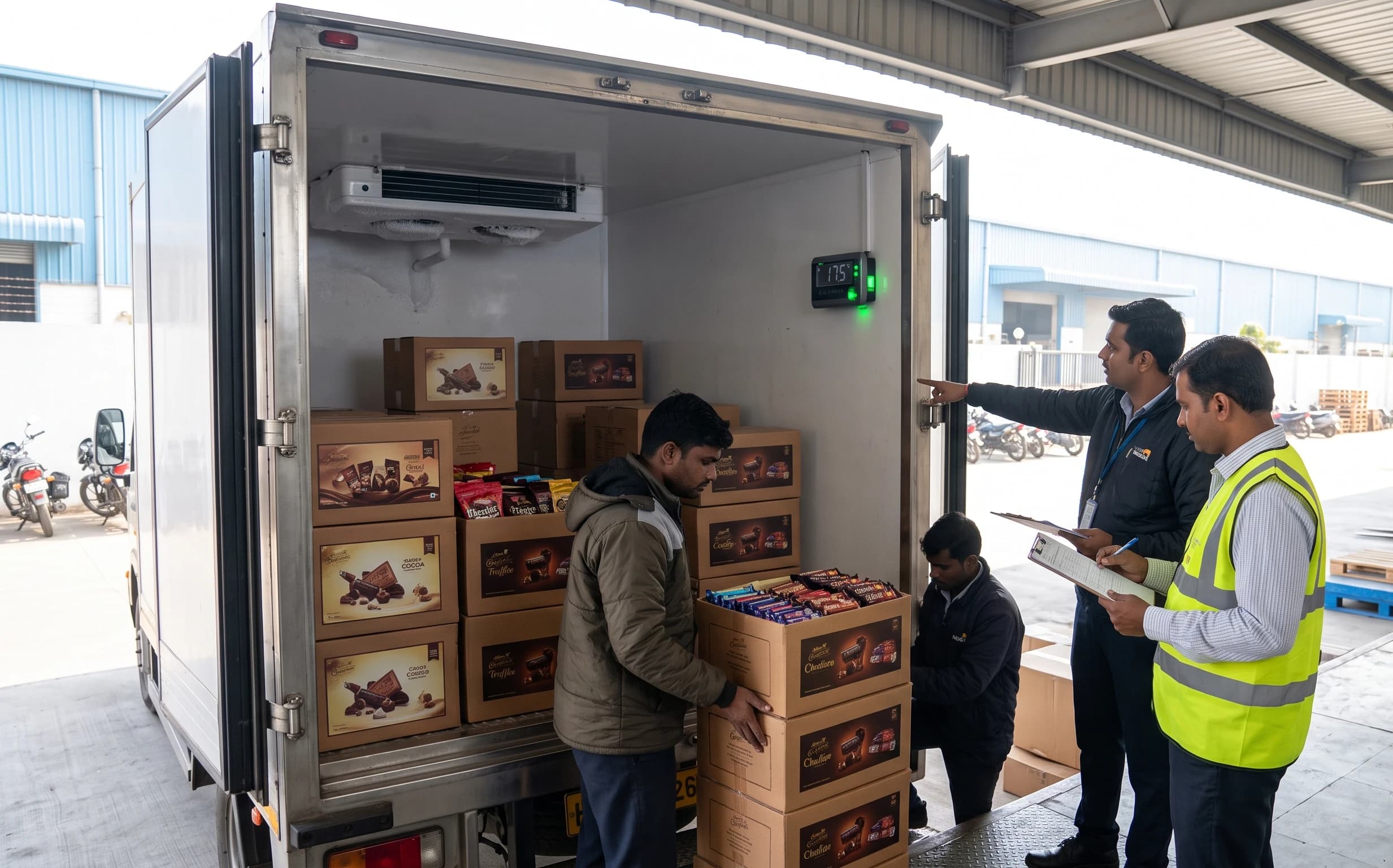
Temperature-controlled logistics helps chocolate brands in India protect product quality during storage, transportation and distribution. Maintaining stable, product-appropriate temperatures, controlling humidity, using suitable packaging and monitoring shipments helps reduce melting, chocolate bloom and condensation. A well-managed cold chain supports consistent quality from manufacturing facilities to warehouses, retail outlets and dark stores.
Temperature-controlled logistics for chocolate brands in India is essential for protecting chocolate from heat exposure, humidity and temperature fluctuations during transit. India’s varying climate makes reliable storage and transportation particularly important for premium chocolate manufacturers and confectionery businesses. JustDeliveries provides temperature-controlled F&B logistics, warehousing and distribution solutions that help brands manage these challenges. But what does an effective chocolate cold chain actually involve?
Why Do Chocolate Brands Need Temperature-Controlled Logistics in India?
Chocolate is sensitive to environmental conditions. Exposure to excessive heat can soften or melt it, while temperature fluctuations and moisture can affect its appearance, texture and finish. These problems become more challenging when products travel between manufacturing facilities, distribution centres, retail stores and customers.
For a chocolate business, damaged products can mean rejected deliveries, inventory losses, customer complaints and additional replacement costs.
The need for temperature controlled logistics chocolate brand India solutions becomes especially important during summer, when vehicles, loading bays and temporary storage areas can expose chocolate to elevated temperatures.
A reliable logistics strategy helps brands:
- Maintain consistent product quality during transportation.
- Reduce losses caused by melting and poor handling.
- Support timely replenishment across multiple locations.
- Improve shipment visibility and operational accountability.
- Scale distribution without building every logistics capability in-house.
What Is the Ideal Temperature for Chocolate Storage and Transportation?
There is no single temperature suitable for every chocolate product. Requirements depend on the formulation, packaging, intended shelf life and manufacturer’s recommendations.
Dark chocolate, milk chocolate, white chocolate, filled pralines and chocolate-coated products can respond differently to temperature and humidity changes. Brands should establish product-specific handling specifications before selecting storage and transport conditions.
For many conventional chocolate products, a cool, dry and stable environment is preferable to repeated cooling and warming. A commonly used storage reference is approximately 15°C–18°C, but this should not be treated as a universal specification for every product or shipment.
Common Chocolate Storage and Transportation Risks
- Melting: Excessive heat softens chocolate and can compromise its shape, packaging and presentation.
- Fat bloom: Cocoa butter can migrate towards the surface and recrystallise, producing whitish or greyish patches. Temperature fluctuations can contribute to this problem.
- Sugar bloom: Moisture or condensation dissolves surface sugar. When the moisture evaporates, sugar crystals can remain on the surface, creating a rough appearance.
- Odour contamination: Chocolate can absorb strong surrounding odours, making clean storage areas and appropriate segregation important.
Effective temperature controlled logistics for chocolate brands in India therefore requires more than simply placing products inside a refrigerated vehicle. It requires a coordinated plan for storage, loading, transportation and delivery.
How to Transport Chocolate Without Melting in India
Preventing melting starts before a shipment leaves the manufacturing facility. Brands need to coordinate product preparation, packaging, vehicle selection and delivery schedules.
1. Choose the Right Temperature-Controlled Vehicle
Select a vehicle capable of maintaining the required conditions for the product throughout the planned route. Vehicle capacity, insulation, refrigeration performance, route duration and expected ambient temperatures should all influence the decision.
A vehicle suitable for frozen foods is not automatically suitable for chocolate. Excessively low temperatures or poorly managed transitions can introduce condensation risks when products move into warmer environments.
2. Use Appropriate Packaging
Packaging should protect chocolate from physical damage, moisture and external odours. Depending on the product, this may involve protective inner wrapping, suitable cartons and insulated secondary packaging.
For premium chocolate, packaging also protects the visual presentation that customers expect.
3. Plan Loading and Unloading Carefully
Long waiting periods at loading docks can expose products to unsuitable conditions. Pre-cooling the vehicle where required, preparing documentation in advance and coordinating delivery appointments can reduce unnecessary exposure.
Keep loading doors open only as long as operationally necessary, and avoid leaving chocolate in direct sunlight.
4. Monitor Temperature Throughout Transit
Temperature monitoring helps logistics teams identify deviations before they become larger operational problems. GPS tracking provides shipment-location visibility, while temperature records help teams assess whether the required conditions were maintained.
These controls are central to temperature controlled logistics chocolate brand India operations, particularly when shipments move across multiple distribution points.
5. Establish a Clear Exception-Handling Process
If a temperature excursion occurs, the team should record the event, assess the duration and severity, and follow the manufacturer’s product-disposition procedure. Products should not automatically be considered acceptable simply because they have returned to the target temperature.
What Does an Effective Chocolate Cold Chain in India Include?
A chocolate cold chain connects every stage of the product journey, from manufacturing and storage to distribution and final delivery. A weak link at any stage can undermine the handling practices followed elsewhere.
An effective system typically includes:
- Product-specific storage: Conditions based on the chocolate’s requirements rather than a generic temperature setting.
- Suitable warehousing: Clean facilities with appropriate environmental controls.
- Controlled transportation: Vehicles selected for the required temperature range and route.
- Shipment monitoring: Temperature records and tracking to support operational visibility.
- Inventory management: Stock rotation, batch traceability and organised dispatch planning.
- Coordinated delivery: Defined service-level agreements (SLAs), planned routes and documented handovers.
For businesses evaluating chocolate cold chain India solutions, these elements should be considered together rather than purchased or managed as disconnected services.
How JustDeliveries Supports Temperature-Controlled Chocolate Logistics
JustDeliveries focuses on B2B food and beverage logistics, helping businesses coordinate transportation, warehousing and distribution through a connected operating model. Its services are relevant to chocolate brands that need structured delivery operations as they expand across cities and sales channels.
JD Regular: Dedicated Recurring Transportation
JD Regular supports recurring transportation requirements for businesses that move products on planned routes and schedules. For chocolate brands supplying retail outlets, distribution centres or business customers, scheduled transportation can support more predictable replenishment.
JD Instant: On-Demand Temperature-Controlled Vehicles
JD Instant provides access to dedicated temperature-controlled vehicles for on-demand or scheduled trips. This can be useful for urgent replenishment, additional shipments during seasonal demand and movements that do not fit an established delivery schedule.
JD Storage: Warehousing and Inventory Support
JD Storage provides cold storage and warehousing options, with temperature capabilities across a stated range of -18°C to +18°C. The appropriate storage environment must be confirmed for each chocolate product and its handling specifications.
Together, these services provide options for brands looking to coordinate storage and transportation without independently building every part of their logistics infrastructure.
How Quick Commerce Is Changing Chocolate Distribution in India
Quick-commerce platforms have increased expectations around product availability, fulfilment speed and inventory replenishment. For chocolate brands, this creates additional pressure to move products reliably between manufacturing locations, distribution hubs and dark stores.
Platforms such as Swiggy Instamart, Zepto, Blinkit, Amazon, JioMart and BigBasket represent important online retail and fulfilment channels for consumer brands. Their operational requirements can differ by location, product category and fulfilment model.
A suitable logistics setup may need to support:
- Hub-to-hub transfers between distribution facilities.
- Scheduled replenishment of dark stores.
- Time-sensitive deliveries during seasonal peaks.
- Shipment tracking and documented handovers.
- Temperature control appropriate to the product.
- Coordination between dispatch teams and receiving locations.
JustDeliveries supports temperature-controlled F&B logistics and distribution operations, including movements connecting production facilities, outlets and dark stores. Its multi-city network and technology-enabled operating model can help businesses organise distribution as their requirements grow.
Brands should confirm platform-specific service requirements, route coverage and any applicable service arrangements before implementation.
How the HQ App Improves Logistics Visibility
Managing several vehicles, delivery schedules and temperature requirements can become complicated as a chocolate brand expands. A centralised logistics dashboard helps teams view operations without relying entirely on manual follow-ups.
The JustDeliveries HQ App brings together operational information for F&B brands, including:
- Live vehicle and shipment visibility.
- Temperature-compliance monitoring.
- Service-level agreement (SLA) performance.
- Billing and operational records.
- AI-driven performance insights.
This consolidated view can help operations teams identify delays, review temperature deviations, evaluate delivery performance and make more informed logistics decisions.
For temperature controlled logistics chocolate brand India requirements, visibility is particularly valuable when several facilities and delivery points must follow the same product-handling specifications. Monitoring does not eliminate every risk, but it improves the information available to teams when action is needed.
How to Choose a Logistics Partner for Premium Chocolate
Premium chocolate brands need to consider more than transportation rates when selecting a logistics partner. Product presentation, shipment reliability and consistent handling all influence the customer experience.
Before making a decision, evaluate the following:
- Temperature capability: Can the provider support your product’s documented storage and transport requirements?
- Route coverage: Does its network serve your manufacturing facilities, warehouses and destination markets?
- Monitoring: Are temperature records and shipment tracking available?
- Operational processes: Are loading, handover and temperature-excursion procedures clearly defined?
- Scalability: Can the provider accommodate seasonal demand and additional delivery locations?
- Cost transparency: Are transportation, storage, handling and additional service charges clearly explained?
Mansi Mahansaria, Founder and CEO of JustDeliveries, established the business around the operational challenges of food logistics and the need to reduce inefficiencies in the movement of perishables. That F&B-focused approach is relevant to chocolate brands seeking a logistics partner that understands the importance of coordinated transportation and storage.
For businesses comparing temperature controlled logistics chocolate brand India providers, the strongest choice is one that matches operational capability to the product’s actual requirements.
Conclusion: Build a More Reliable Chocolate Cold Chain with JustDeliveries
Maintaining chocolate quality requires coordination across storage, transportation, handling, and final delivery. For brands operating in India’s varied climate, a clearly defined cold-chain process helps reduce avoidable product damage, improve shipment visibility and support consistent distribution.
JustDeliveries offers F&B-focused transportation, warehousing and technology-enabled logistics solutions to help businesses manage these operational requirements. Its JD Regular, JD Instant, JD Storage and HQ App capabilities provide options for recurring deliveries, on-demand vehicle requirements, storage support and logistics visibility.
Ready to strengthen your chocolate distribution network?
Partner with JustDeliveries to discuss your product-specific temperature requirements, delivery routes, storage needs and distribution volumes. Build a logistics plan designed around your operations, from manufacturing and warehousing to retail replenishment and dark-store deliveries.
Connect with JustDeliveries to explore a tailored cold-chain logistics solution for your chocolate brand.
Frequently Asked Questions
Q1. How can chocolate be transported without melting in India?
Use a suitable temperature-controlled vehicle, protective packaging, planned loading procedures and continuous shipment monitoring. Follow the chocolate manufacturer’s specified handling conditions.
Q2. Can chocolate be transported in a refrigerated truck?
Yes. A refrigerated truck can transport chocolate when its temperature settings and operating conditions match the product’s requirements. Excessive cooling and condensation must also be managed.
Q3. Is temperature-controlled logistics necessary for premium chocolate in India?
It is often important, particularly during hot weather, long-distance transportation and multi-stage distribution. The required controls depend on the chocolate formulation, packaging and manufacturer’s specifications.
Q4. Will chocolate melt during quick-commerce delivery?
It can if exposed to excessive heat or unsuitable holding conditions. Appropriate storage, controlled replenishment and well-planned handovers help reduce this risk.
Q5. What is the ideal temperature for transporting chocolate?
The correct temperature depends on the product. Approximately 15°C–18°C is a common reference for many conventional chocolate products, but the manufacturer’s documented specification should determine the actual operating range.
Q6. What does temperature-controlled logistics for chocolate brands include?
It can include suitable warehousing, refrigerated or temperature-controlled transportation, shipment monitoring, inventory management, route planning and documented handling procedures.
Q7. Why does chocolate develop white patches during transportation?
White patches may indicate fat bloom or sugar bloom. Fat bloom involves changes in cocoa butter crystallisation, while sugar bloom commonly results from moisture or condensation.
Q8. Why should chocolate brands choose a specialised F&B logistics partner?
A specialised F&B logistics partner can help coordinate product-appropriate transportation, storage, monitoring and distribution processes. The right provider should also offer suitable route coverage and transparent operational reporting.